December 19, 2023
Building a better beast
The RSQ e-tron has been significantly improved in five key areas going into Dakar 2204.
Preparing for its third Dakar Rally assault, the Audi RSQ e-tron has been painstakingly prepared with key improvements across a number of key areas.
Share article
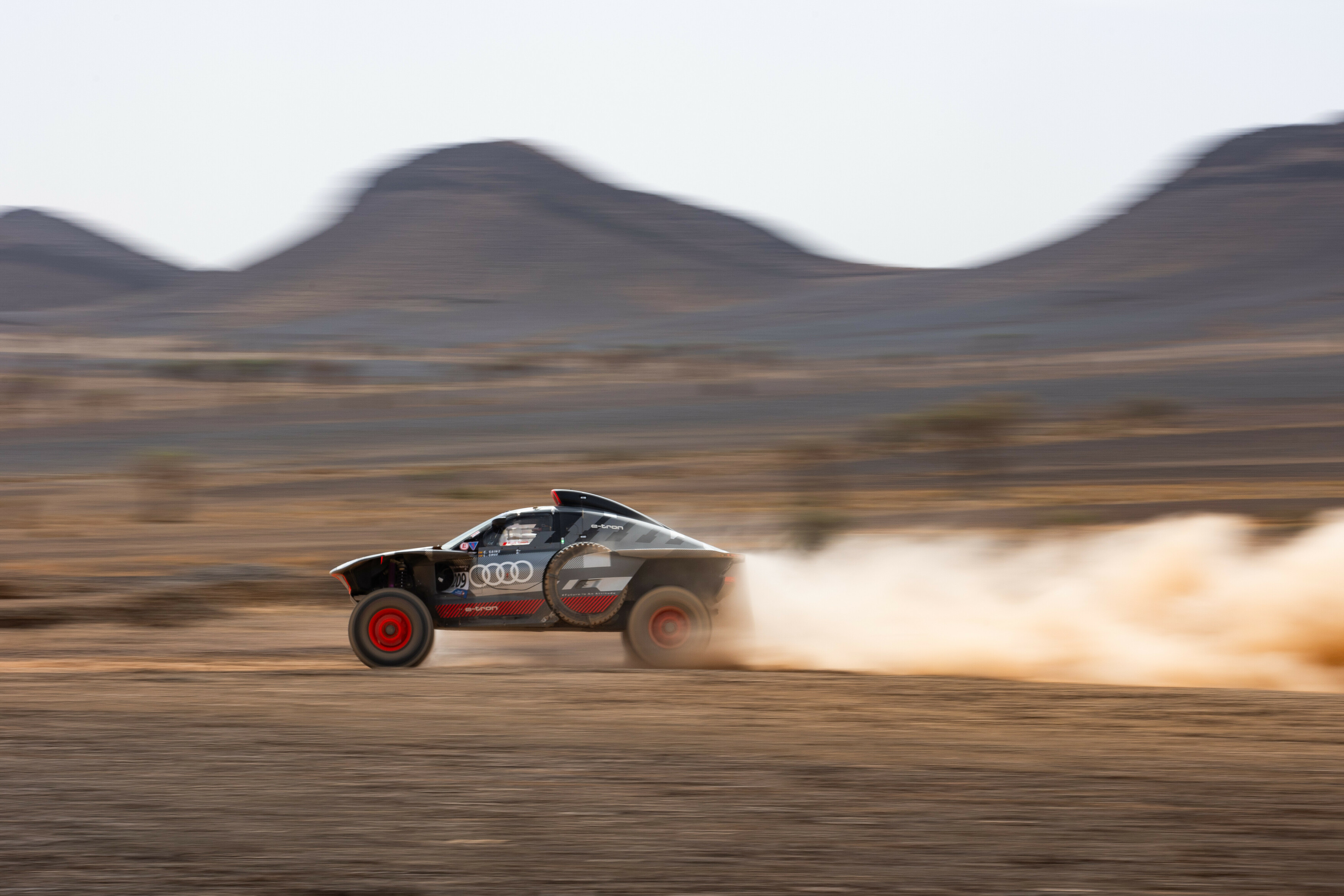
On January 5th next year, Audi Sport will line-up in Saudi Arabia for what will be its third assault on the great race – the Dakar Rally. Once again, three driver pairings, driving three Audi RSQ e-tron hybrid-electric race vehicles will take on one of the toughest races in the world – an epic that could be described as bordering on automotive abuse.
Just to survive and finish Dakar is an achievement in itself, with winning stages and ultimately winning a class or even the outright event, considered one of the great achievements in world motorsport.
Preparation is everything when it comes to Dakar, taking lessons from each previous race and looking for ways to ‘Dakar-proof’ equipment is one of those never ending tasks that occupies teams each year.
For Audi Sport, 2023 has been one of tremendous hard work in preparation for next year’s race. Through both competition and extensive testing, the team has made significant improvements to the RSQ e-tron in a number of key areas.
Safety
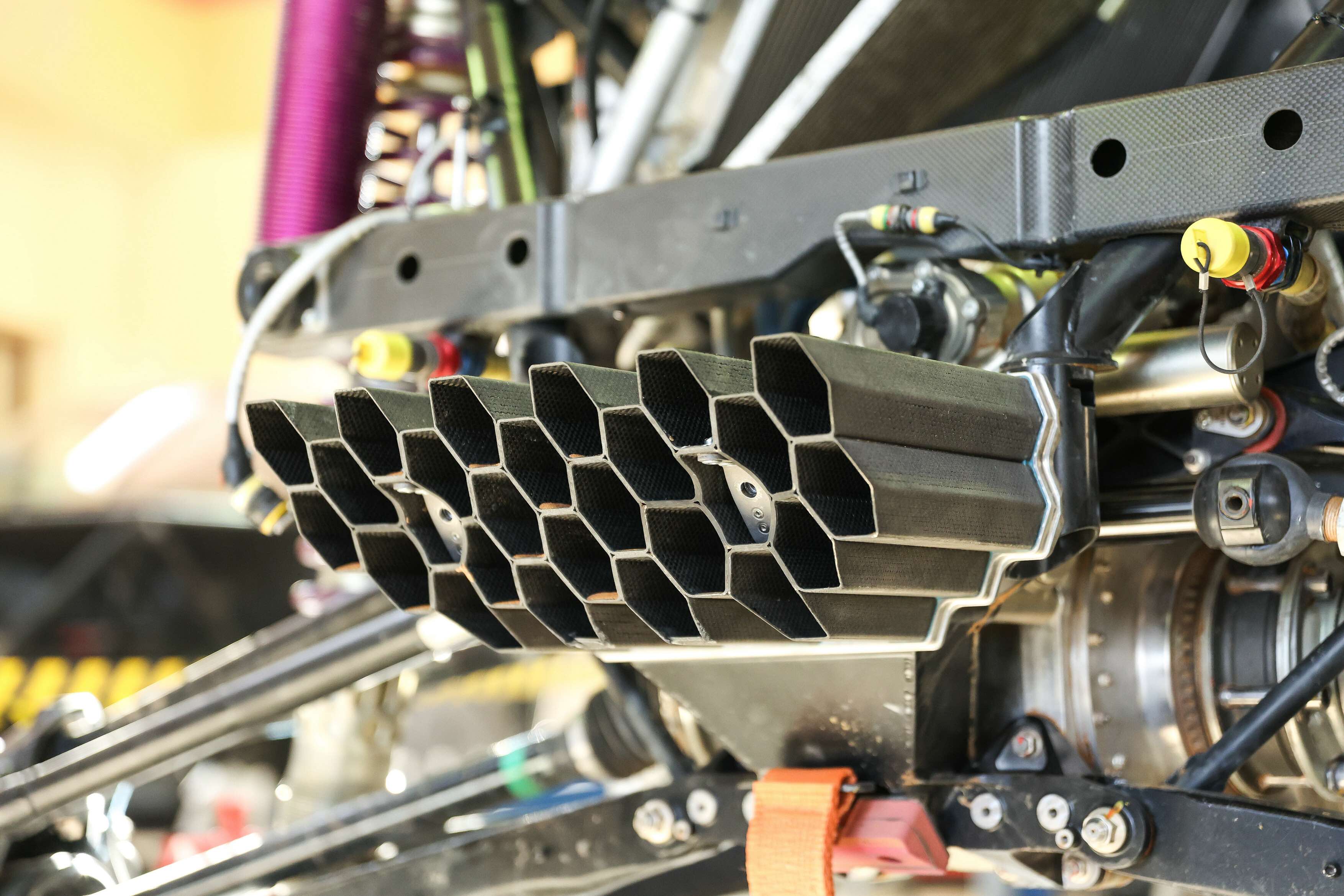
Although the RSQ e-tron has always exceeded the required safety standards, even more work has been in this area following the accidents suffered by two of the vehicles in the 2023 event. Making changes to the springs, dampers and the bumpstop in the chassis, Audi engineers have been able to better distribute the load on the vehicles, particularly as they land after hitting big jumps. Frontal protection too has been revised with the CFRP crash box at the front end of the chassis structure now longer and able to absorb energy from frontal impacts better than before. Yet despite these changes the revised crash box does not compromise the angle of attack necessary to tackle the dunes and other steep climbs encountered during the event.
The developers also focused on the material stiffness and geometries of the foam in the driver' seats, even taking into account how the cockpit temperature influence the stiffness of the foam. The protection of the occupants after a hard frontal landing of the vehicle, like Carlos Sainz’s second accident at the 2023 Dakar Rally, upper most in the minds of the developers looking into this area.
Rolling stock
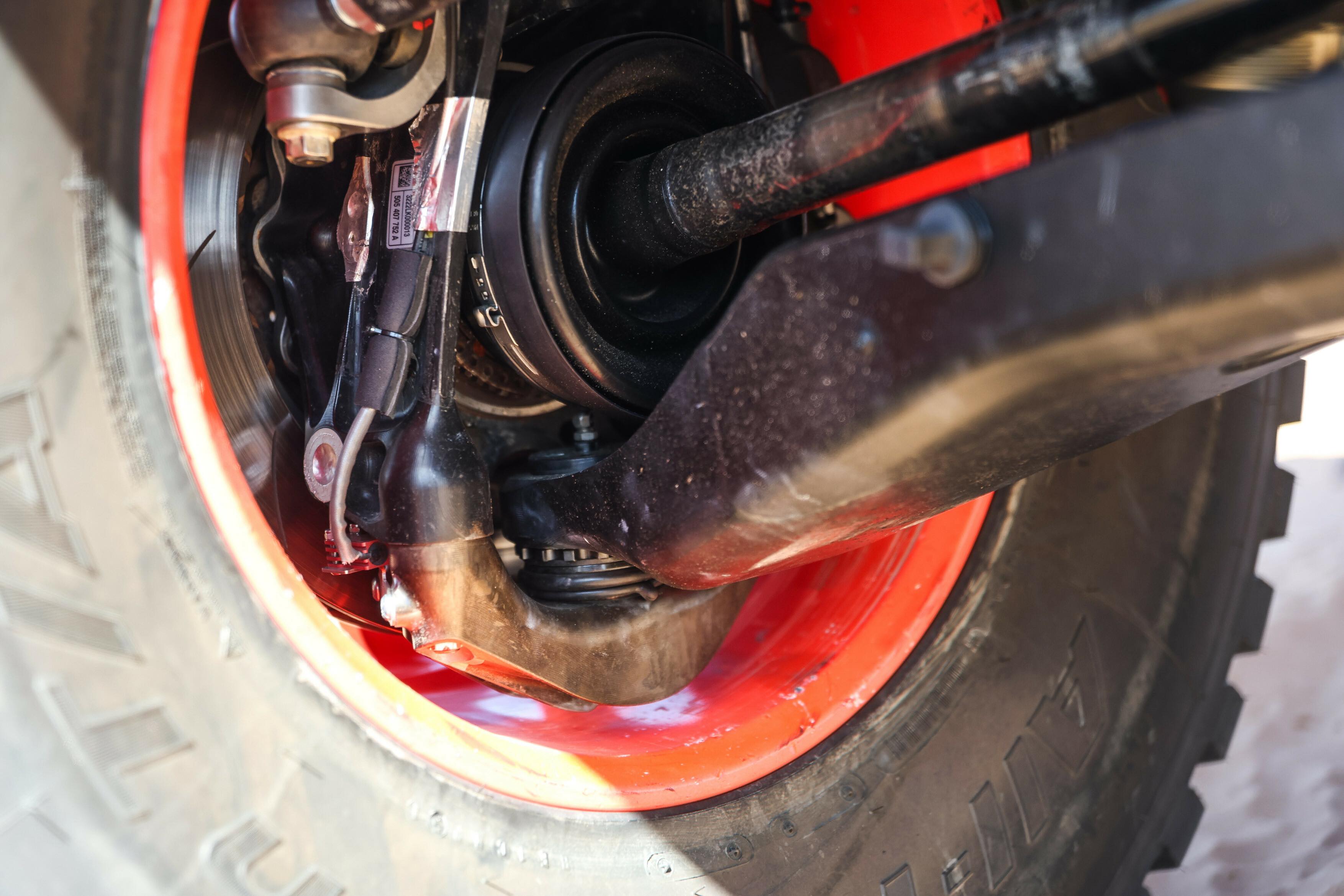
The humble tyre change is a constant issue for participants in the Dakar, as the harsh terrain takes a terrible toll on both the wheels and tyres of vehicles. In the first two outings, stones have also been caught between the rim bed, brake disc and upright. In some cases, they caused significant damage, often leading to time-consuming wheel changes. New fastening elements for the uprights allow greater clearance so that the stones are thrown out more easily and at the same time, Audi Sport is using more robust rims for 2024. Tyres too have been beefed up, with the new generation of BF Goodrich tyres featuring thicker sidewalls for greater protection against sharp rocks and unforgiving terrain.
Maintenance on the go
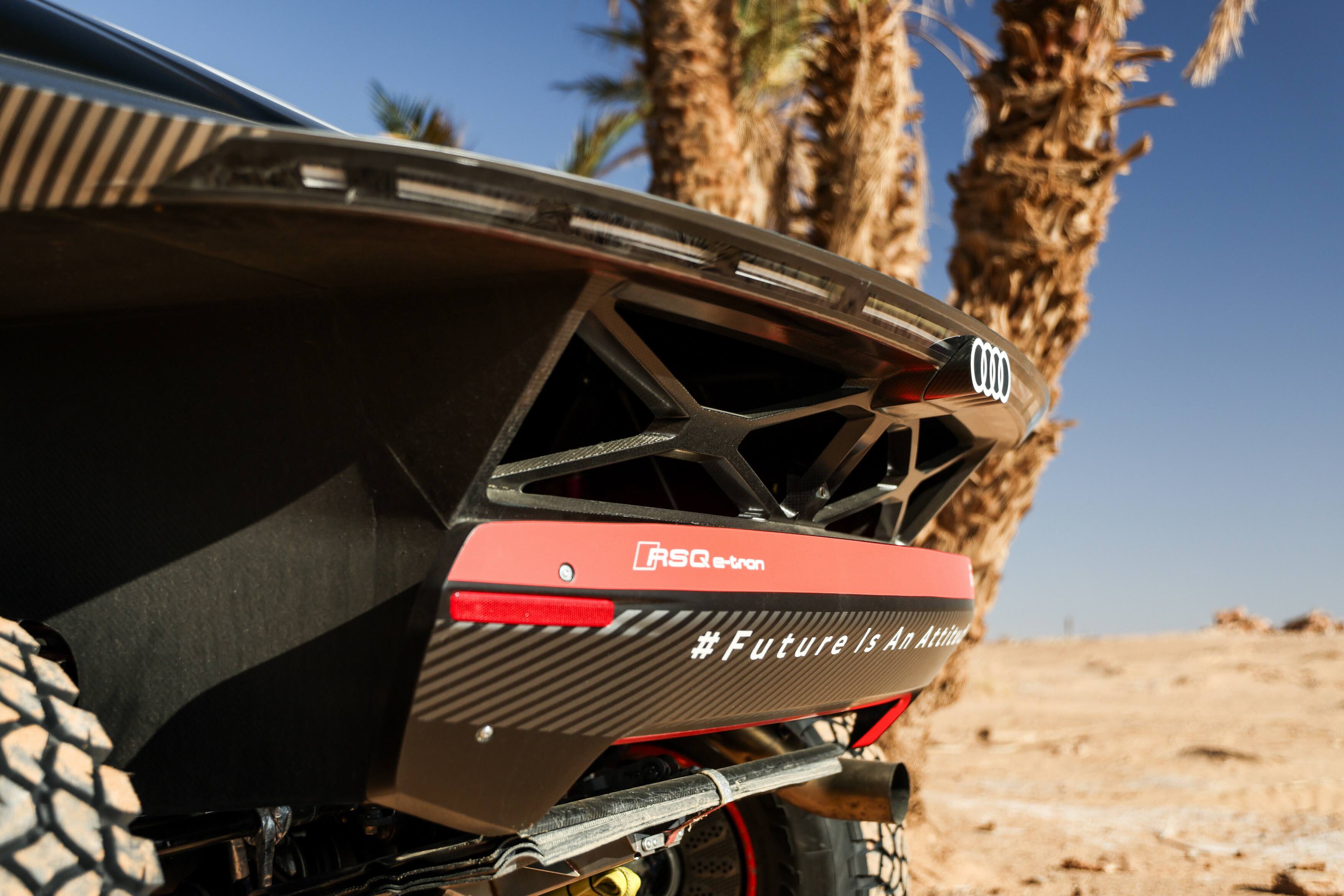
As much a part of the Dakar as fast times, is performing maintenance on the go. Making it easier to get at an array of items routinely needing attention will go a long way to speeding up the process of keeping the RSQ e-trons on the move and in top condition throughout the race. From modified bolted connections, improved tool holders and body parts and panels bolted instead of glued in place, Audi’s engineers have looked at every conceivable way of making servicing easier and as a result, faster.
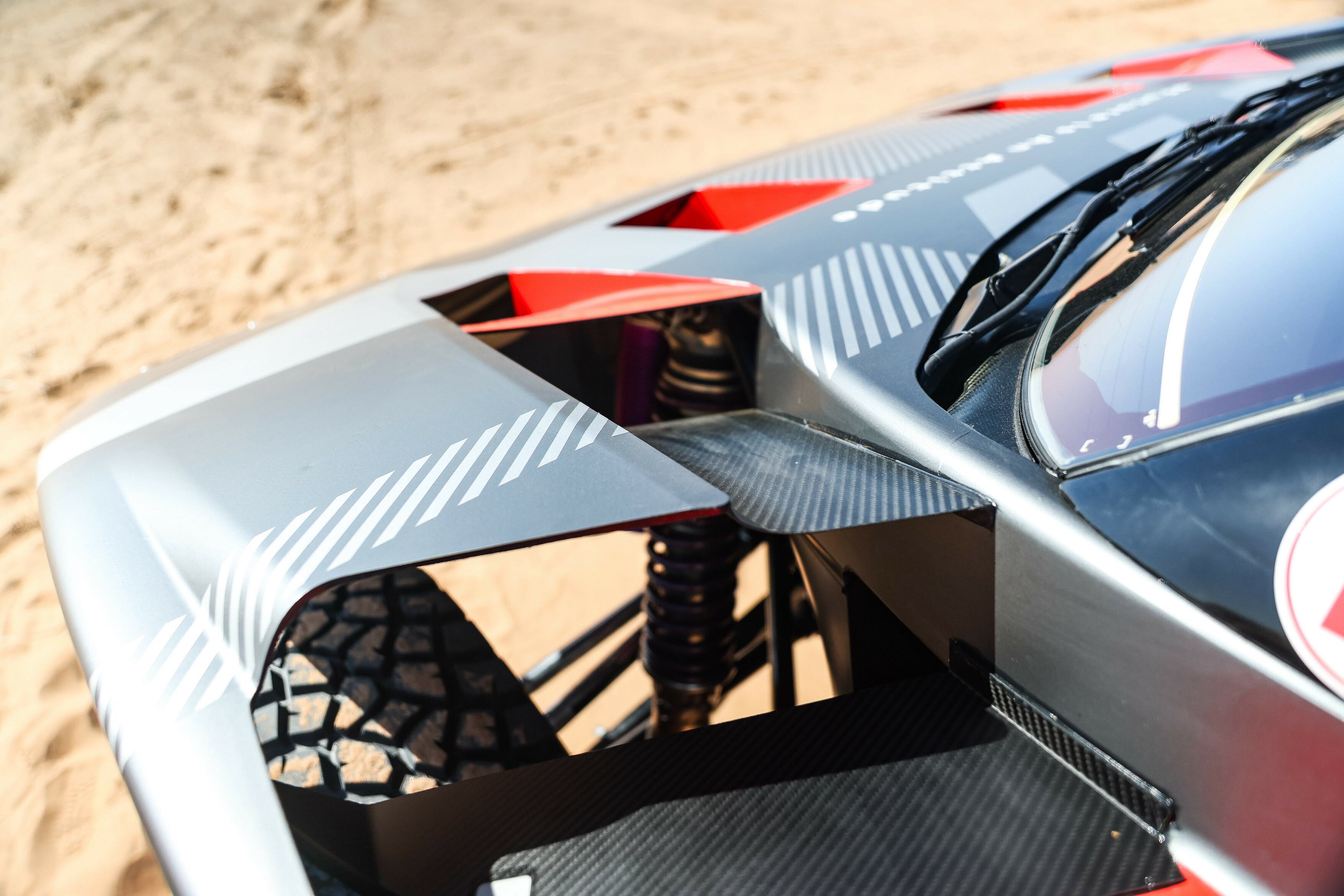
Honing performance
From the chassis to the software, the body to the electric drivetrain – Audi Sport engineers looked at numerous ways to make the Audi RS Q e-tron even more competitive. The heavier, more robust tyres have meant optimising the weight of various other components to make sure the RSQ e-tron still makes the new regulation weight of 2100kg, which is 10kg heavier than the previous regulation weight. No component has escaped scrutiny in this regard, from smaller brake callipers right down to the footrest for the co-driver – looking to make weight and optimise power to weight for the race.
Regulation changes this year will also see the power output upped from 271kW in the 2023 Dakar Rally, raised to 286kW.
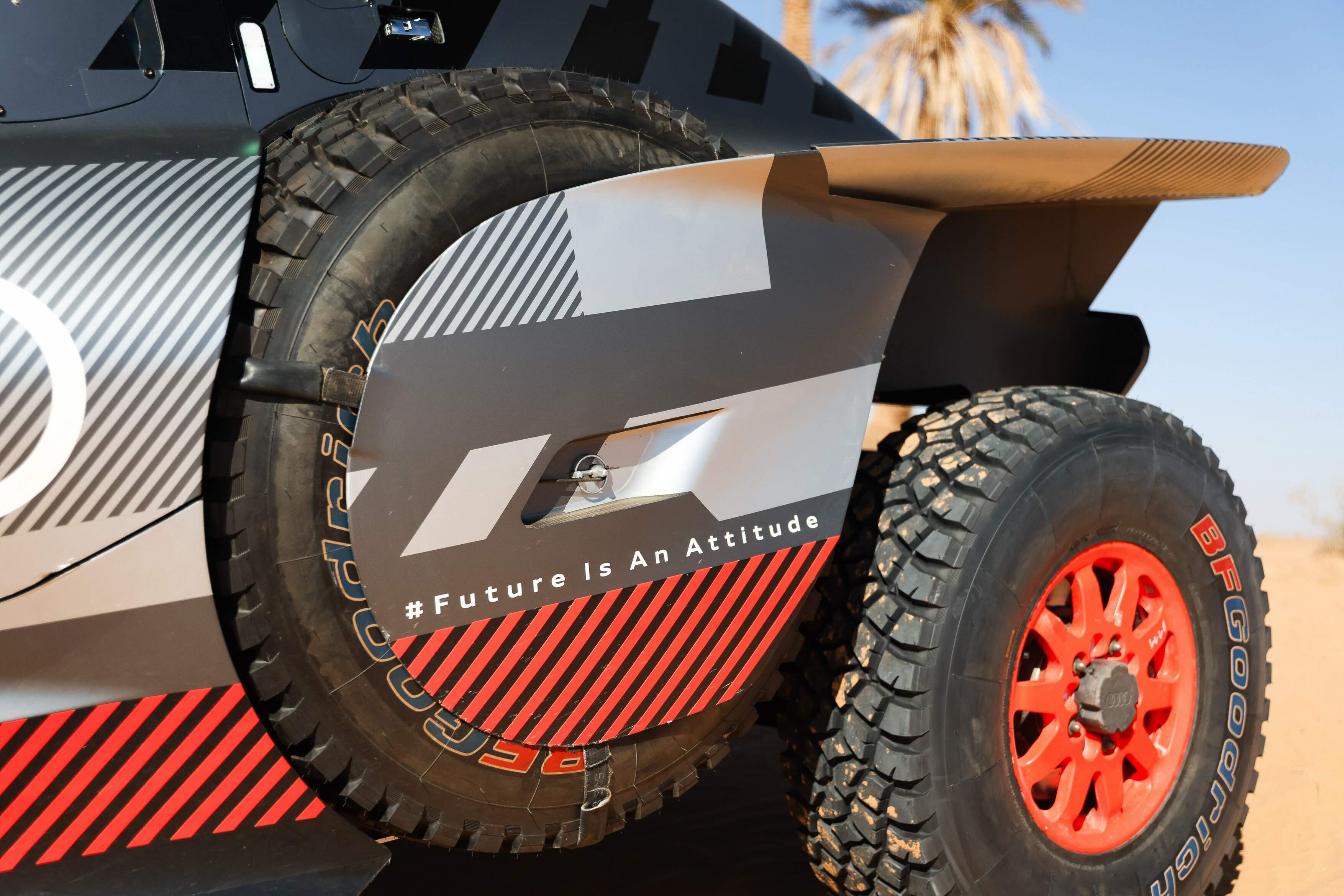
Driver comfort
Although comfort and the Dakar Rally do not necessarily go hand in hand, every effort has been made to make sure that the all-important driver pairings are not only safer but more comfortable during the race.
To help Audi Sport’s extraordinary driving teams perform at their best, engineers have optimised the acoustic shielding inside the vehicles, as well as better sealing the cockpit. In addition, a modified front bonnet now better repels swirled mud and water, which allows the windshield to remain cleaner and thus help visibility in what are already trying conditions.
All of the preparations are now complete from an engineering perspective and come January, it will once again come down the driving talents of Mattias Ekström and Emil Bergkvist, Stéphane Peterhansel and Edouard Boulanger and Carlos Sainz and co-driver Lucas Cruz. Of course with Dakar, the best laid plans can easily be brought undone, but the Audi Sport team go into the 2024 event in the best shape of its campaign to date.